
Battery Safety & Supply Chain Resilience: Custom OEM/ODM Solutions
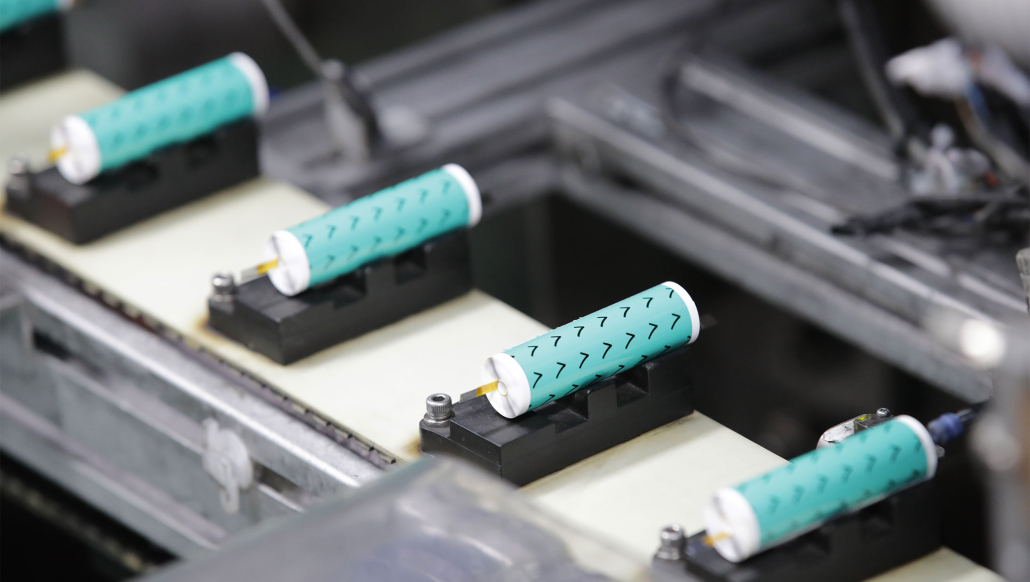
In the rapidly evolving landscape of global electrification, energy density and unit cost are no longer the sole criteria for evaluating custom battery manufacturing partners. As international supply chains face geopolitical friction, raw material volatility, and tightening environmental standards, original equipment manufacturers (OEMs) and original design manufacturers (ODMs) face a dual challenge: ensuring uncompromising Battery Safety while maintaining high Supply Chain Resilience.
At Hypercell, we specialize in end-to-end custom battery pack design and precision manufacturing. Serving high-stakes industries—including medical devices, industrial automation, consumer electronics, and smart IoT networks—Hypercell integrates advanced battery safety engineering with robust, traceable supply chain systems to guarantee uninterrupted product performance and brand reliability.
Multi-Layered Battery Safety Architecture: Cell to BMS Integration
Safety is built into the fundamental chemistry, mechanical layout, and electronic controls of every custom Hypercell battery pack. Whether using Lithium Iron Phosphate (LiFePO4) for high thermal stability, high-density Cylindrical cells (18650 / 21700), or flexible Lithium-polymer (LiPo) form factors, our multi-tiered safety protocols mitigate risk across all operating conditions.
- Thermal Isolation & Structural Integrity: Precision spacing between cells prevents single-cell thermal events from propagating across the pack. We utilize UL94-V0 flame-retardant structural frames, thermal pads, and impact-resistant enclosures.
- Smart BMS Safeguards: Our custom Battery Management Systems (BMS) provide real-time monitoring of voltage, current, internal resistance, and temperature. Dual-layer hardware protection ensures backup shut-off in the event of firmware anomalies.
- Scene-Driven Chemistry Matching: Matching cell chemistry (LiFePO4, Cylindrical, LiPo) precisely to the electrical and physical constraints of medical instruments, IoT nodes, or rugged industrial equipment.
Supply Chain Resilience & Manufacturing Traceability
A reliable battery design requires a secure, transparent supply chain. Hypercell leverages state-of-the-art automated production lines and digital tracking infrastructure to insulate B2B clients from market disruptions and quality defects.
| Resilience Dimension | Traditional Sourcing Model | Hypercell OEM/ODM Advantage |
| Cell Sourcing & QVL | Single-vendor dependency | Dual-sourcing strategic partners across LiFePO4, Cylindrical & LiPo cells |
| Manufacturing Precision | Manual assembly lines | Fully automated welding, sorting, and pack testing lines |
| Traceability & Execution | Batch-level paper logs | Unit-level digital Manufacturing Execution System (MES) tracking |
| Global Compliance | Basic regional testing | UN38.3, IEC62133, UL1973, ISO9001, CE… |
End-to-End MES Traceability
Hypercell’s proprietary Manufacturing Execution System (MES) tags every raw cell, BMS board, and connector with a unique barcode during incoming quality control (IQC). Throughout automated spot welding, capacity grading, and final aging tests, real-time parametric data is linked to the individual serial number. This enables complete product genealogy, targeted warranty tracking, and full compliance with global regulations such as the European Union’s Digital Battery Passport.
Comprehensive Testing & Global Certification Readiness
Bringing a custom medical device, IoT sensor, or industrial machine to global markets requires rapid, predictable certification pathways. Hypercell provides in-house validation using specialized testing equipment, including thermal shock chambers, automated cycle testers, vibration tables, high-voltage short-circuit simulators…
Our custom battery solutions are manufactured under strict ISO 9001 quality management systems and are engineered to meet international safety and transport standards.
- UN 38.3 & MSDS: Guaranteed safe air and maritime transport compliance.
- IEC 62133: International safety standard for portable sealed lithium secondary packs in consumer, IoT, and medical applications.
- UL 1973: Safety standards for stationary energy storage and industrial motive battery systems.
- CE, RoHS, REACH: Full environmental and electromagnetic compatibility for European and North American expansion.
Frequently Asked Questions
Q1: What customized battery solutions does Hypercell offer for OEM/ODM clients?
A: Hypercell provides end-to-end custom battery pack development, including custom BMS engineering, mechanical enclosure design, cell selection (LiFePO4, Cylindrical, LiPo), automated prototyping, full-scale manufacturing, and global certification support tailored for medical, industrial, consumer, and IoT applications.
Q2: How does Hypercell’s MES system enhance battery quality and supply chain safety?
A: Our MES tracks each component and production parameter (welding current, capacity test, voltage drift) in real time against a unique serial number. This ensures quality gatekeeping, root-cause traceability, and seamless audit compliance for B2B supply chain security.
Q3: Why choose LiFePO4 vs. Lithium-polymer (LiPo) for custom IoT or medical applications?
A: LiFePO4 is ideal for applications prioritizing ultra-long cycle life (2000+ cycles) and supreme thermal safety, such as medical carts and industrial equipment. Lithium-polymer (LiPo) offers high energy density and ultrathin, flexible form factors ideal for compact consumer electronics and slim IoT sensors. Hypercell engineers assist in selecting the optimal chemistry for your specific device requirements.