Stacking vs. Winding Battery Technology: A Complete Guide for Lithium-Ion Cell Manufacturing
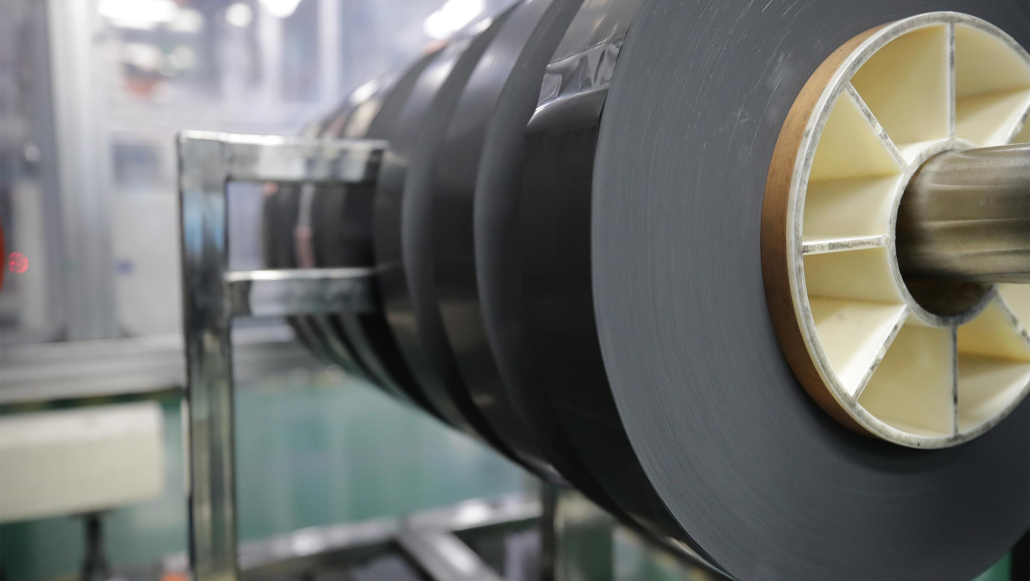
Lithium-ion battery performance is not only determined by chemistry but also by how the internal electrodes are assembled. Among the most widely used manufacturing methods, stacking (lamination) and winding (jelly-roll) define the core structure of a battery cell.
While cylindrical batteries typically use winding technology and pouch cells mainly use stacking, prismatic batteries can adopt either process depending on performance and cost requirements.
Understanding these two technologies is essential for selecting the right battery solution for applications such as electric vehicles, medical devices, robotics, and consumer electronics.
Lithium-Ion Battery Manufacturing Overview
The battery manufacturing process generally includes four key stages:
- Electrode slurry mixing
- Coating, drying, calendaring, and slitting
- Cell assembly (stacking or winding)
- Electrolyte filling, formation, and grading
Among these, cell assembly is the most critical stage, as it directly determines the internal structure and performance of the battery.
What Is Winding Technology?
Winding technology, also known as the jelly-roll process, is the most mature lithium-ion battery assembly method.
In this process:
- Positive electrode
- Separator
- Negative electrode
are continuously wound into a cylindrical or prismatic structure.
This creates a spiral internal structure commonly referred to as a “jelly roll.”
Applications of Winding Batteries
- 18650 cells
- 21700 cells
- 4680 cylindrical cells
- Power tools
- Consumer electronics
- Energy storage system
Advantages of Winding Technology
1. Highly mature manufacturing process
Winding has been developed over decades and is widely standardized.
2. High production efficiency
Continuous manufacturing enables large-scale automation.
3. Lower cost
Mature equipment and stable yield reduce overall production cost.
4. Excellent consistency
Suitable for mass production of standardized battery cells.
Limitations of Winding Technology
- Internal stress concentration in jelly-roll structure
- Limited space utilization due to cylindrical geometry
- Slight constraints in energy density improvement
What Is Stacking Technology?
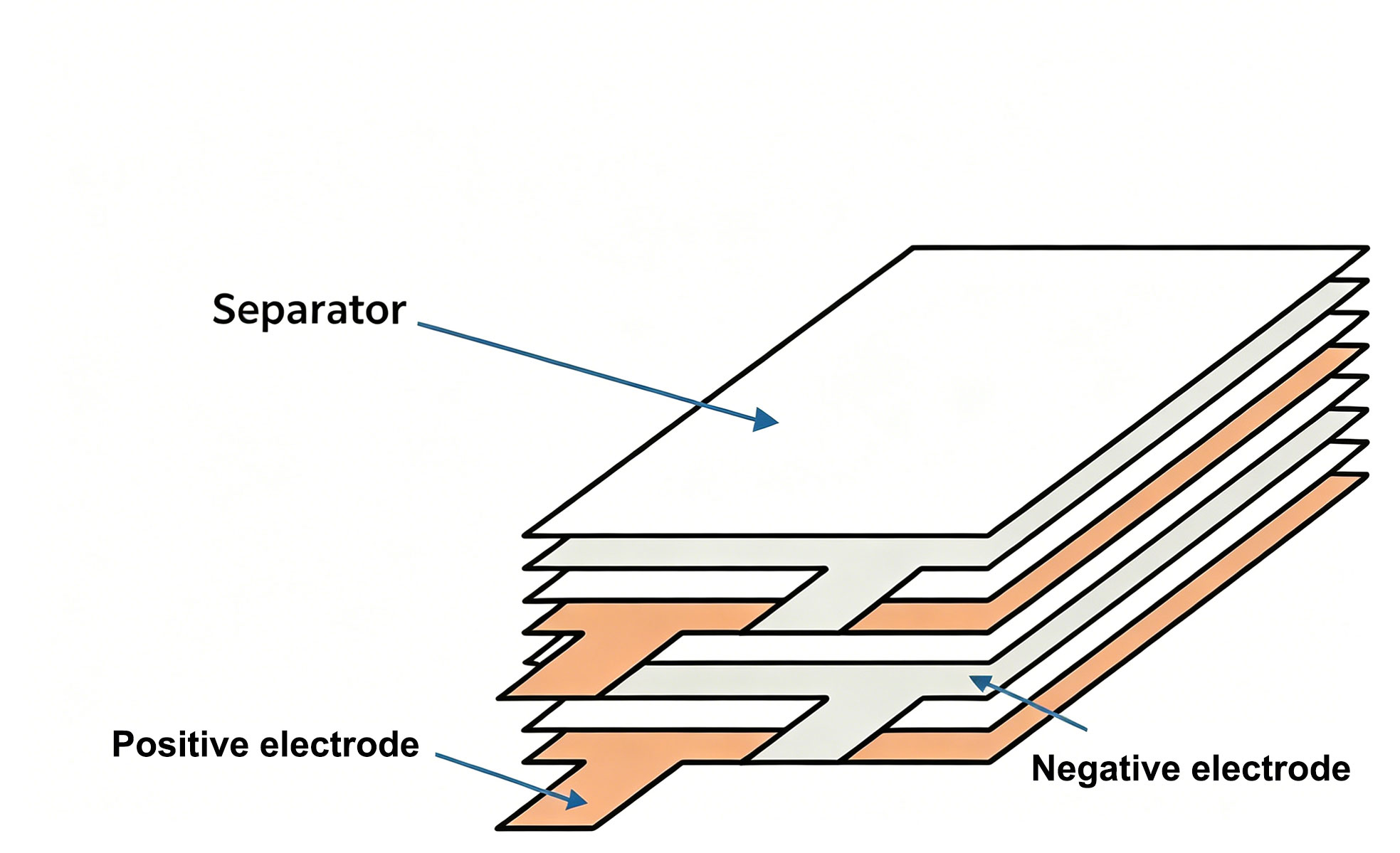
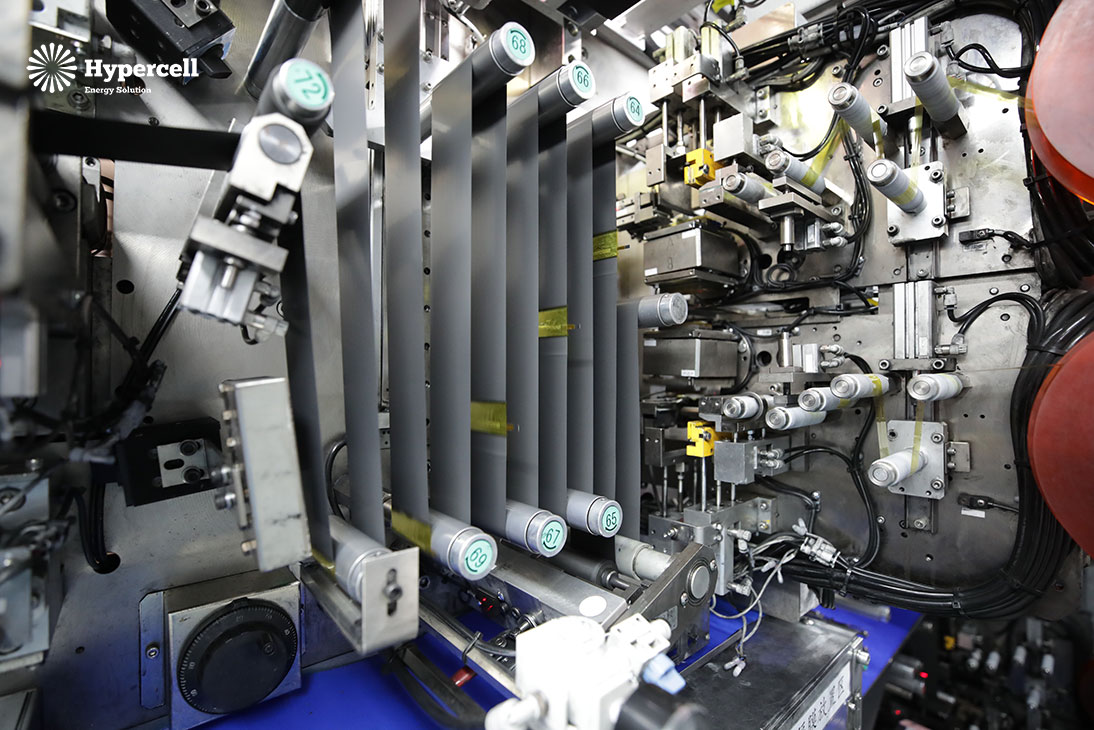
Stacking technology assembles electrodes by cutting them into individual sheets and stacking them layer by layer.
The typical structure is:
Positive electrode → Separator → Negative electrode → Separator → repeated stacking
This creates a flat and uniform electrode structure.
Applications of Stacked Batteries
- High voltage batteries
- Blade batteries
- High-energy-density prismatic batteries
- Drones
- Medical devices
- High-performance robotics
Advantages of Stacking Technology
1. Higher energy density potential
Better space utilization increases active material ratio.
2. Improved thermal management
More uniform heat distribution reduces hotspots.
3. Longer cycle life
Lower mechanical stress improves durability.
4. Enhanced safety performance
Reduced internal resistance and improved thermal stability.
5. Better fast-charging capability
Lower polarization improves charge acceptance.
Limitations of Stacking Technology
- Higher equipment investment
- Lower production efficiency compared to winding
- More complex process control requirements
Stacking vs Winding: Key Differences
| Winding | Stacking | |
|---|---|---|
| Production Efficiency | High | Medium |
| Manufacturing Cost | Lower | Higher |
| Energy Density | High | Higher |
| Cycle Life | Long | Longer |
| Fast Charging | Good | Better |
| Thermal Management | Good | Better |
| Safety Performance | Good | Better |
| Process Complexity | Low | Higher |
| Equipment Cost | Lower | Higher |
| Scalability | Excellent | Good |
Why Stacking Offers Higher Energy Density
Stacking technology improves energy density through:
1. Better space utilization
No central void like cylindrical winding structures.
2. Higher active material ratio
Less inactive structural space inside the cell.
3. Uniform electrode alignment
Improves ion transport efficiency.
4. Reduced internal resistance
Shorter electron and ion pathways.
Fast Charging Performance Comparison
Fast charging performance is increasingly important in modern applications.
Stacked cells generally perform better because:
- More uniform current distribution
- Lower internal polarization
- Better thermal stability during high-rate charging
This makes stacking ideal for:
- Electric vehicles
- Drones
- High-performance industrial systems
Safety Considerations
Battery safety is influenced by both design and manufacturing precision.
Key safety factors include:
- Burr control during electrode cutting
- Separator integrity
- Internal short-circuit prevention
- Thermal runaway resistance
While both technologies can be safe when properly engineered, stacking often provides improved thermal uniformity in large-format cells.
Industry Applications
Winding Battery Applications
- Power tools
- Consumer electronics
- Portable energy storage
- Industrial equipment
- Cylindrical battery platforms (18650 / 21700 / 4680)
Stacking Battery Applications
- Electric vehicles
- High-end drones
- Medical devices
- Robotics systems
- High-energy-density prismatic batteries
Industry Trends
The lithium battery industry is evolving toward higher energy density and improved safety.
Key trends include:
- Growth of large-format prismatic batteries
- Increased adoption of stacking technology in EVs
- Continued dominance of cylindrical winding cells in consumer and industrial applications
- Development of high-speed stacking equipment
Companies such as Tesla continue to use winding-based cylindrical platforms like 4680 cells, while manufacturers like BYD promote blade battery designs based on stacked architectures.
How Hypercell Selects the Right Technology
At Hypercell, battery design is application-driven rather than technology-driven.
We evaluate multiple factors:
- Energy density requirements
- Discharge rate
- Cycle life targets
- Size and weight constraints
- Operating environment
- Cost efficiency
Based on these parameters, we select the most suitable cell architecture—whether winding or stacking—to ensure optimal performance for each application.
Frequently Asked Questions (FAQ)
1.Is stacking better than winding?
There is no absolute “better” option. The best choice depends on application requirements.
2.Why do cylindrical batteries use winding?
Because winding is highly efficient and well-suited to cylindrical geometry.
3.Why are pouch batteries usually stacked?
Stacking maximizes space utilization and improves energy density.
4.Which technology lasts longer?
Stacking may offer longer cycle life due to reduced mechanical stress, depending on design and usage conditions.
5.Is stacking more expensive?
Yes, due to higher equipment cost and lower production efficiency.
6.Can both technologies be used in prismatic batteries?
Yes, prismatic batteries can adopt either stacking or winding depending on design goals.
7.Which is better for fast charging?
Stacking generally performs better in high-rate charging applications.
Conclusion
Stacking and winding are two fundamental lithium-ion battery manufacturing technologies, each with distinct advantages.
Winding offers cost efficiency, mature production, and high scalability.
Stacking provides higher energy density, better thermal performance, and improved electrochemical stability.
The optimal choice depends entirely on application requirements rather than a universal superiority of one technology.
At Hypercell, we provide customized lithium battery solutions tailored to performance, safety, and cost objectives across diverse industries.