
UN38.3 Battery Certification Explained: What You Need to Know
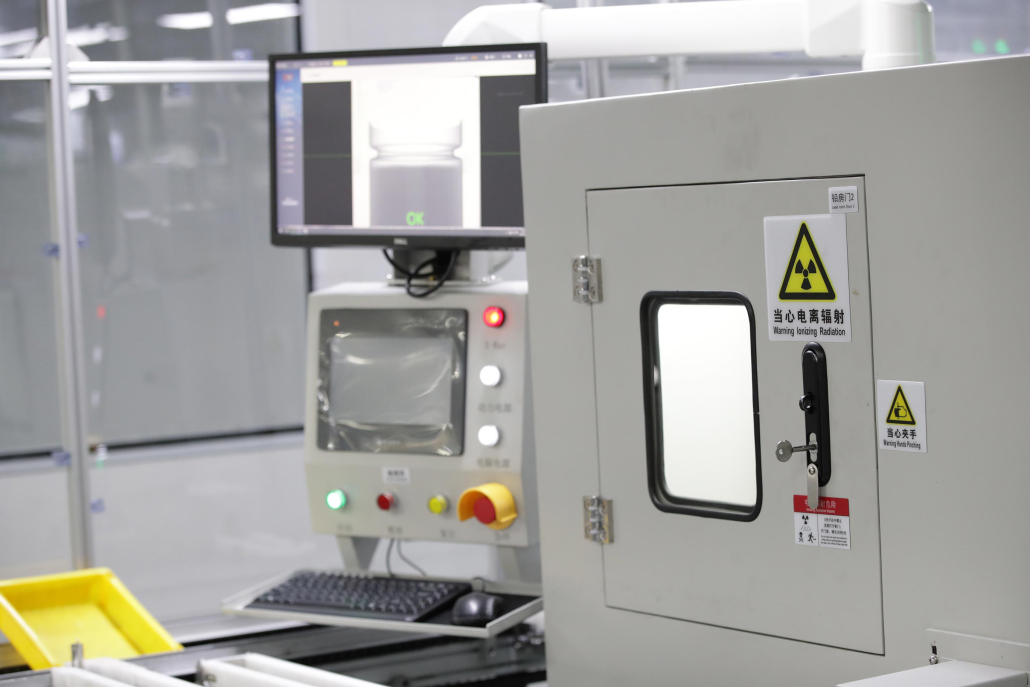
UN38.3 refers to Section 38.3 of the United Nations Manual of Tests and Criteria. The standard ensures that lithium-ion and lithium metal batteries can safely withstand thermal, mechanical, and electrical stresses encountered during global transport without:
- Leaking hazardous materials
- Rupturing structural enclosures
- Experiencing thermal runaway or catching fire
- Disassembling or exploding
Failure to present verified UN38.3 test summary reports can result in immediate shipment rejection by air carriers, ocean freight handlers, customs clearance authorities, and international distribution logistics providers.
Why UN38.3 Matters for OEM Product Success
Integrating high-capacity battery packs without factoring in transportation clearance is a common pitfall in hardware development. A battery system may deliver high energy density and optimal runtime during operation, yet fail mechanical shock or altitude pressure simulations.
To secure global market access, OEM engineering teams must integrate transportation safety requirements directly into early-stage product requirements.
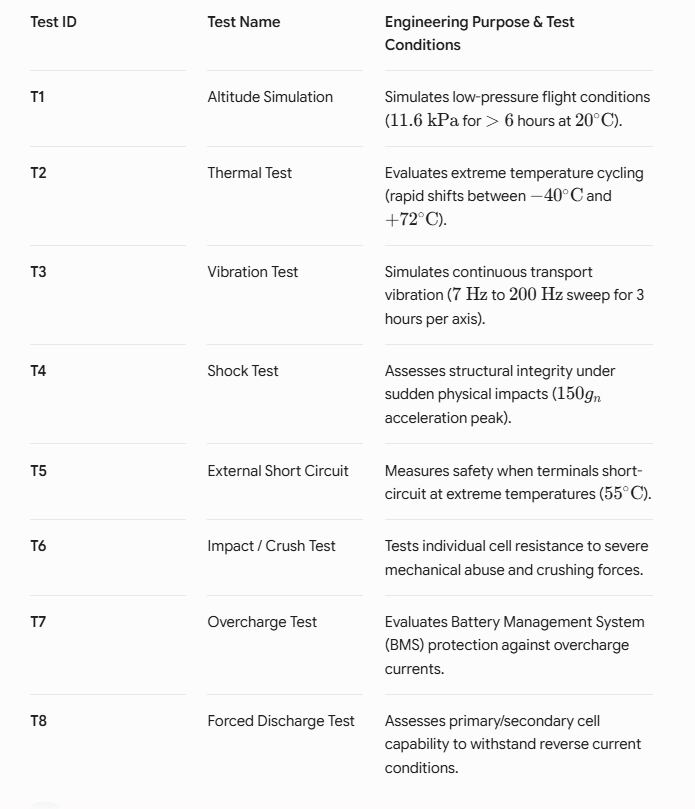
Required UN38.3 Test Sequence
UN38.3 testing requires battery cells and multi-cell packs to undergo a rigid series of environmental, mechanical, and electrical stress evaluations.
Target OEM Application Sectors
UN38.3 compliance is mandatory across all major battery-powered product categories:
- Industrial Equipment & Robotics: Automated Guided Vehicles (AGVs), Autonomous Mobile Robots (AMRs), portable diagnostic equipment.
- Medical Devices: Portable monitoring systems, mobile ventilators, surgical power tools.
- UAV & Commercial Drones: Mapping equipment, inspection drones, defense systems.
- IoT & Smart Infrastructure: Asset tracking devices, remote environmental monitors, smart utility meters.
Common Causes of UN38.3 Failure
- Subpar Cell Quality: Low-tier cells exhibit high internal resistance variations, leading to thermal instability under stress.
- Inadequate BMS Design: Weak protective circuitry fails to interrupt current during short-circuit (T5) or overcharge (T7) testing.
- Weak Mechanical Housing: Insufficient internal structural support leads to broken solder joints, disconnected nickel strips, or cracked outer enclosures during shock (T4) and vibration (T3) tests.
- Thermal Accumulation: Inadequate cell spacing traps heat, accelerating runaway during high-temperature short-circuit tests.
How Custom Battery Engineering Accelerates Compliance
Partnering with experienced custom battery engineering specialists mitigates certification risks and prevents redesign loops. Custom designs optimize performance through:
- Integrated BMS Architectures: Custom-tuned firmware and hardware protections ensure instantaneous disconnects during overcharge and short-circuit conditions.
- Advanced Thermal Barrier Engineering: Phase-change materials, thermal pads, and directional heat dissipation prevent cell-to-cell thermal propagation.
- Ruggedized Structural Enclosures: Custom-molded housings and isolated cell holders absorb high-G impacts and continuous harmonic vibration.
Compliance Best Practices for OEMs
Do:
- Select tier-1 cell manufacturers with per-certified base chemistry testing.
- Integrate multi-tier BMS hardware protection logic.
- Implement physical thermal barriers between high-energy density cells.
- Work with experienced battery design partners early in the development cycle.
- Maintain complete UN38.3 Test Summary documentation (per UN 38.3.5 requirements).
Avoid:
- Using off-the-shelf, non-validated consumer-grade battery assemblies.
- Postponing compliance design until late prototype stages.
- Omitting structural vibration and shock resistance in internal pack geometry.
Frequently Asked Questions
1.Is UN38.3 certification mandatory globally?
Yes. International transport authorities including IATA, ICAO, IMO, and DOT mandate UN38.3 compliance for shipping lithium batteries by air, sea, rail, or road.
2.Does every custom battery configuration require its own UN38.3 test?
Yes. Any change to cell type, pack architecture, series-parallel configuration, enclosure design, or BMS protection scheme requires a new test sequence or official change evaluation.
3.How long does the UN38.3 certification process take?
Standard testing timelines typically range from 4 to 6 weeks, depending on laboratory availability, pre-test preparation, and battery cycle times for overcharge and thermal stability tests.