
Understanding IEC 62619: The Gold Standard for Industrial Lithium-Ion Battery Safety
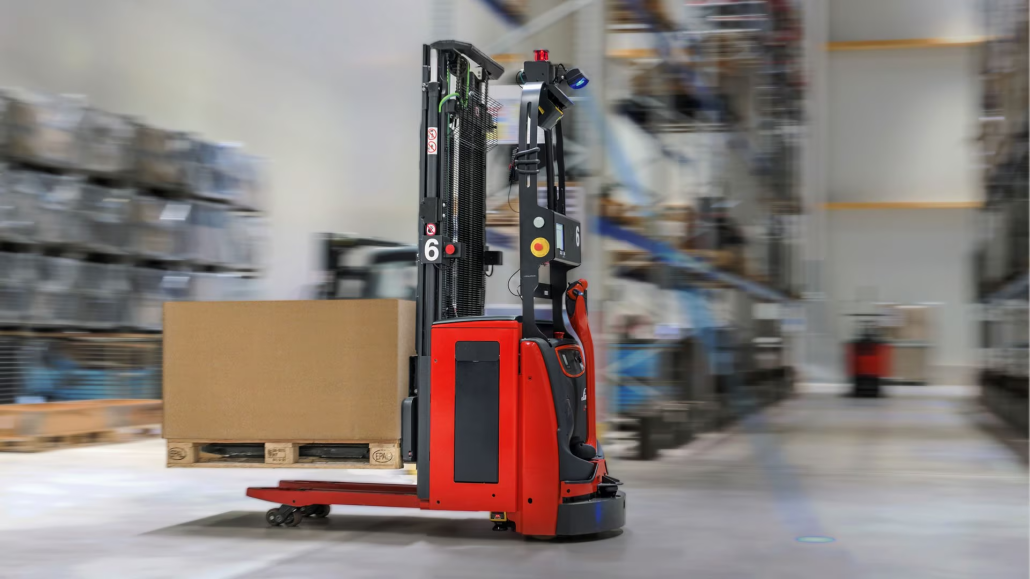
Discover why IEC 62619 is critical for industrial AGV and robotics battery packs. Learn key testing protocols, compliance benefits, and real-world OEM/ODM engineering examples.
As the global transition toward smart logistics and automation accelerates, industrial equipment—particularly Automated Guided Vehicles (AGVs) and Autonomous Mobile Robots (AMRs)—increasingly relies on advanced lithium-ion technology. However, severe 24/7 industrial operational stresses demand a higher level of safety assurance than consumer electronics.
Enter IEC 62619, the international safety standard specifically designed for secondary lithium cells and batteries used in industrial applications. For B2B procurement managers, engineers, and system integrators, understanding IEC 62619 is crucial when selecting a custom lithium battery OEM/ODM partner.
What is IEC 62619?
IEC 62619 is an international standard established by the International Electrotechnical Commission (IEC). It specifies requirements and tests for the safe operation of secondary lithium cells and batteries used in heavy-duty applications, such as:
- Motive Applications: AGVs, AMRs, electric forklifts, golf carts, and automated guided equipment.
- Stationary Applications: Energy Storage Systems (ESS), UPS, and telecom backup infrastructure.
- Specialized Heavy Duty: Railway systems, marine power, and severe-environment equipment.
Unlike consumer standards (such as IEC 62133), IEC 62619 accounts for heavy-duty operational profiles, higher energy capacities, severe thermal environments, and the complex safety management systems (BMS) required in industrial robotics.
Key Safety Requirements and Testing Protocols
To achieve IEC 62619 compliance, battery cells and complete battery packs must undergo rigorous testing categorized into electrical, mechanical, and thermal safety parameters:
| Test Category | Key Test Item | Objective |
| Electrical Safety | External Short Circuit | Verifies that the battery withstands a low-resistance short circuit without fire or explosion. |
| Overcharge Control | Evaluates cell behavior and BMS protection mechanisms under high charging voltages. | |
| Over-discharge Control | Ensures stability when cells are drained down to 100% Depth of Discharge (DOD). | |
| Mechanical Safety | Drop & Impact | Simulates physical mishandling during automated operation, shipping, or heavy equipment use. |
| Vibration & Shock | Confirms structural integrity under continuous industrial machinery motion. | |
| Thermal Safety | Thermal Abuse | Tests cell stability at elevated temperatures to ensure no thermal runaway propagation. |
| Functional Safety | BMS Safety Evaluation | Assesses software and hardware safeguards, including multi-level voltage, current, and temperature monitoring. |
Case Study: Engineering an IEC 62619-Compliant AGV Battery Pack
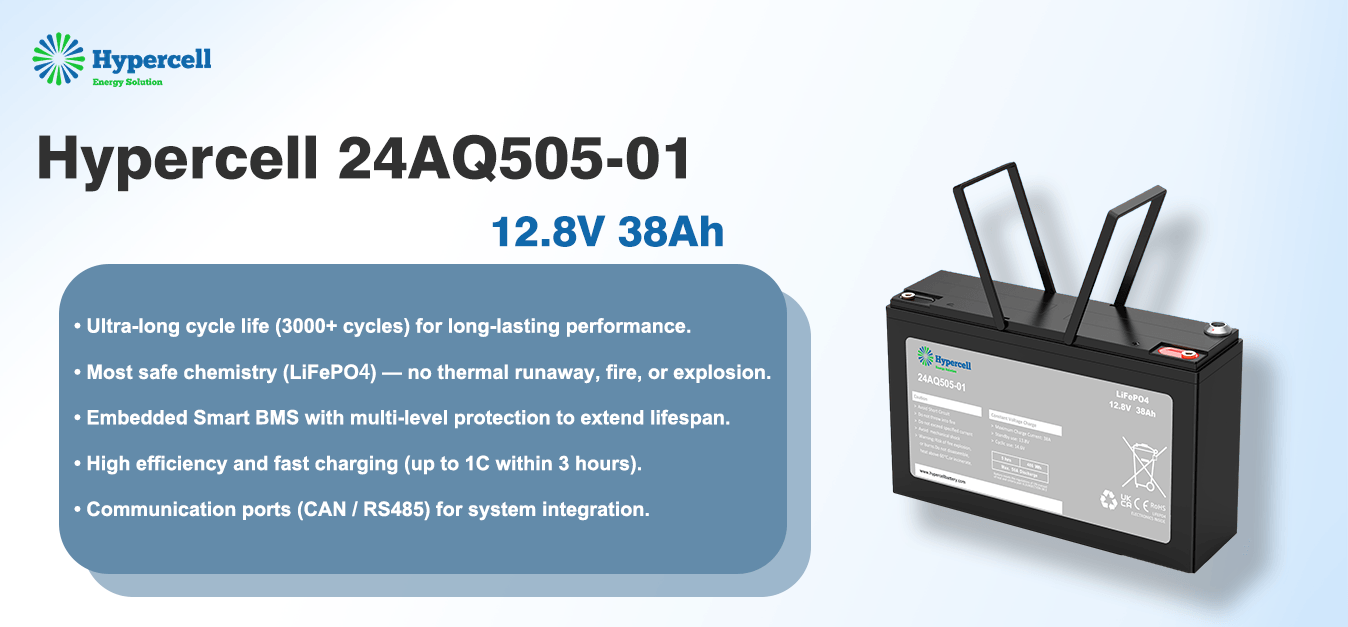
To illustrate how IEC 62619 safety principles are applied in custom OEM/ODM manufacturing, consider our 24AQ505-01 12.8V 38Ah (Max 832W) Heavy-Duty AGV Lithium Battery Pack.
Designed specifically for automated material handling and robotics operating in demanding factory environments, this pack integrates key safety, electrical, and structural design standards required by industrial safety protocols:
1. Thermal Runaway Immunity & Chemistry Safety
Using ultra-safe Lithium Iron Phosphate (LiFePO4) chemistry, the battery inherently eliminates thermal runaway risks, ensuring zero fire or explosion under abnormal operating conditions. It supports over 3,000+ deep charge cycles (100% DOD) and operates across extreme temperatures ranging from -20°C to +60°C.
2. Multi-Level Embedded Smart BMS
Meeting the strict functional safety requirements of IEC 62619, the pack features an embedded multi-level Smart BMS. It actively monitors cell parameters in real-time and offers optional CANbus or RS485 communication protocols for seamless integration into AGV central control units.
3. Rugged Ingress & Environmental Protection
Industrial AGVs frequently operate in dusty or wet environments. This module utilizes an impact-resistant ABS housing rated at IP67, providing complete ingress protection against dust and temporary water immersion while remaining 50% lighter than equivalent lead-acid units.
- Key Specifications Summary:
Nominal Voltage & Capacity: 12.8V 38Ah (Max 832W output) - Charge Capability: Fast charging up to 1C rate (Fully charged within 3 hours)
- Self-Discharge: Low self-discharge (< 3% per month)
- Maintenance: 100% maintenance-free, eco-friendly (No Lead, Mercury, or Cadmium)
- Certifications: CE, RoHS, UN38.3 compliant (engineered to meet IEC 62619 standards)
Frequently Asked Questions (FAQ)
Q1: What is the main difference between IEC 62619 and IEC 62133?
A:While IEC 62133 targets portable consumer electronics (laptops, power tools, household devices), IEC 62619 is strictly engineered for heavy-duty industrial applications (AGVs, ESS, forklifts). It features higher energy capacity limits, stricter BMS hardware and software functional safety evaluations, and harsher thermal/mechanical test criteria.
Q2: Can a custom AGV battery pack inherit its cells’ IEC 62619 certification?
A:No. While using certified cells is a necessary baseline, the entire battery assembly—including the outer ABS/metal enclosure, internal wiring harness, and BMS safety controls—must be tested together as a complete system to achieve full IEC 62619 compliance.
Q3: Does IEC 62619 support fast charging and deep discharge in AGV systems?
A:Yes. IEC 62619 tests evaluate the BMS’s ability to safely manage high current charging (such as 1C fast charging within 3 hours) and deep discharges up to 100% DOD without compromising structural or electrical integrity.
Custom AGV & Industrial Battery OEM/ODM Solutions
Navigating international safety standards requires specialized engineering capabilities. As an OEM/ODM custom lithium-ion battery manufacturer, we specialize in tailoring cell chemistry, housing dimensions, IP ratings, and communication protocols (CAN/RS485) to meet your exact AGV application requirements.
Contact our engineering team today to request a custom AGV battery design or inquire about IEC 62619 compliance support for your industrial project.